The United Nations faces problems on many fronts, but its biggest challenge may be to prove that it can still play a significant role in international peace and security. Diplomats in New York, including members of the Security Council, lament the fact that the world organization seems unable to get a grip on the wars in Ukraine, Gaza and Sudan. Even where Council members have agreed on crisis response efforts in recent years, as in the deployment of a security force to Haiti in 2024, the results have been meager. As discussions over who should replace Secretary-General António Guterres in 2027 heat up, UN insiders are asking if there is any way to reverse these trends.
The core reasons for the UN’s malaise are not hard to identify. The post-Cold War moment opened a political window for the UN to do more mediation and peacekeeping, as the veto powers in the Security Council opted to cooperate. At times this cooperation went catastrophically wrong, as in Rwanda and Srebrenica. But the UN tended to recover from these disasters, and in cases from Liberia to Timor-Leste, helped states resolve conflicts and build stability. But since the 2011 Arab revolutions split the Security Council, major power cooperation has eroded – and Russia’s all-out aggression against Ukraine and the Israel-Hamas war have both accelerated this process.
Divided Security Council hampers mediation and peacekeeping efforts
Without a more-or-less unified Security Council behind them, UN mediators and peacekeepers have seen their political credibility decline. In the last decade, the institution’s representatives gradually shifted their ambitions from resolving conflicts to mitigating their costs, by protecting civilians where they can and facilitating humanitarian aid. While the UN’s political role receded, its humanitarian work in conflict zones ballooned. In 2024, the World Food Programme (WFP) alone had a budget of $9 billion – nearly three billion more than the UN blue helmet missions.
To some extent, this humanitarian activity offered the Security Council and the wider UN system cover for its lack of political traction in many situations. While the Council split over situations such as Syria and Gaza, it has still been able to agree on resolutions about humanitarian aid and access in these cases. One recent Council ambassador dubbed it the “humanitarian council.”
Now even this humanitarian narrative is hard to sustain. The Trump administration’s aid cuts are forcing WFP and other humanitarian agencies to shed thousands of staff and reduce their support to the vulnerable. As of the third quarter of 2025, the UN had less than a quarter of the funding it requested for aid efforts in cases such as Sudan – and some crises were even less well funded. In Gaza, the US has backed a (so far disastrous) effort to replace UN-led aid delivery with an ad hoc mechanism, the Gaza Humanitarian Foundation, and it may back similar initiatives elsewhere.
Can the UN re-establish relevance with reduced cooperation and resources?
In these circumstances, it is necessary to ask if the UN can re-establish a role in international peace and security on the basis of (i) reduced international cooperation and (ii) fewer resources.
Historians of the UN know that these are not new problems. Prior to the post-Cold War moment of international cooperation, the organization was frequently dogged by major power splits and budget crises. Although it often struggled to deal with major crises, the organization was still able to play a part in addressing conflicts such as those between Israel and its Arab neighbors. As Thant Myint-U notes in a new biography on his grandfather, 1960s Secretary-General U Thant, the Kennedy administration was even ready to ask for UN help in mediating the Cuban missile crisis.
To address today’s threats, the next UN Secretary-General and his team will need to take some lessons from that era. One is to accept that the Security Council is liable to remain divided on many issues. Rather than act as a platform for ambitious cooperation on resolving conflicts, it is more likely to be a space where the major powers come to reduce frictions and reduce the risks of crises escalating between them, often by agreeing highly imperfect deals. While this will often be frustrating, it is a still a valuable mechanism in a period when geopolitical tensions are acute.
SC remains a space for major powers to reduce frictions rather than cooperation
Even the Trump administration, despite its general distaste for the UN, appears to acknowledge this logic. Since January the US has tried to improve cooperation with Russia in the Security Council over files including Ukraine and Syria. This has upset US allies and delivered limited substantive results to date, while US and Russian diplomats have continued to argue over issues such as nuclear-related sanctions against Iran and DPRK. Even if greater major power cooperation through the Council does prove possible, it is liable to be sporadic, and on a case-by-case basis.
Opportunities could still arise. Diplomats say that one potential area for cooperation is Syria, as the Council could back a UN political mission to support the post-Assad authorities through a political transition. This would face obstacles, not least Syrians’ resentment over the UN’s failure to end the civil war in the 2010s. Council members are divided over when and how to lift sanctions on the country. But all sides appear to agree that it is better for the UN to stay engaged in Syria.
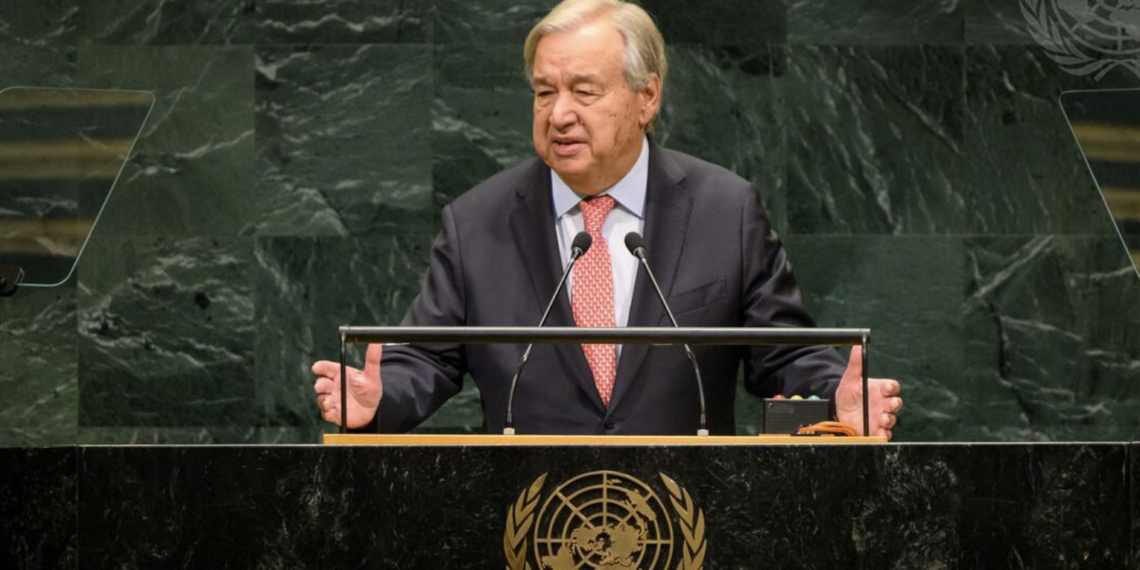
For her or his part, the future Secretary-General will have to develop back channels with major powers – including not only the Council’s permanent members but players currently outside the Council such as India and Brazil – to find entry points into conflicts. António Guterres showed that such backchannel work is still possible be helping mediate the Black Sea Grain Initiative alongside Türkiye, which reduced the impact of Russia’s war on Ukraine on global food prices in 2022. The Black Sea bargain was also a reminder that the Secretary-General and his or her representatives can find potentially political openings even where the Security Council is deadlocked over a crisis.
Guterres has faced criticism from some Western commentators for continuing to engage with Russian President Vladimir Putin, for example by going to a BRICS summit in Kazan in 2024. He has also annoyed Russian officials by speaking up for Ukraine at times. Ultimately, the Secretary-General has to keep all diplomatic channels open, even if it inevitably involves a reputational cost.
UN needs to find cost-efficient ways of dealing with major crises
Given the financial constraints, the UN also needs to look for more cost-efficient ways of dealing with crises where it does find openings. There is a general agreement in New York that the days of large-scale blue helmet peace operations with complex nation-building mandates is over. There is an emphasis on “flexible” and “agile” operations. The UN secretariat is set to deliver a report on this theme in early 2026. There may be opportunities to mount lighter missions by using increasingly affordable technologies, such as drones, for monitoring ceasefires and other tasks.
The UN is unlikely to regain the wide-ranging role in managing international peace and security that it took after the end of the Cold War. But if its leadership can position it as a political broker in a fragmented global landscape, it could help its members navigate a deeply troubled period.
Richard Gowan oversees International Crisis Group’s advocacy work at the United Nations, liaising with diplomats and UN officials in New York.