Global diplomacy has taken some unexpected turns this month, with the big powers battling at the United Nations Security Council over Western Sahara, a conflict that has been running for more than 50 years. The United States administration whipped out its lasso and tried to reel in Western Sahara for its newfound ally, Morocco. Instead, in a major upset for the US and Morocco, Russia vetoed the resolution, and put forth a short counterresolution that was also rejected. With no renewal of its mandate, the fate of the Mission for the Referendum in Western Sahara (MINURSO) was sealed.
While the US/Morocco’s level of diplomatic overreach shocked many, few of us who have been following the diplomatic theatrics surrounding Western Sahara predicted this outcome. There are lessons that can be learned from this saga. The US’ usurping of the UN’s mediation role and attempt to deliver Morocco a total diplomatic victory was a miscalculation. Security Council dynamics are complex. Russia, for its own reasons, was never going to allow the US to create such a precedent.
A resolution of the conflict was never going to come from an imposition by the US in the Security Council. A lasting resolution can only come from within the Maghreb region, not New York, not Washington, nor through a shady deal. Coercing parties into agreement is never sustainable. Mediation efforts must be impartial, inclusive and regionally driven, if they are to succeed. Many of us have argued the UN and the Secretary-General’s good offices could have played a more meaningful role in ending the conflict, if they had been consistent with their own mediation principles that were hardly observed — such as inclusivity and national ownership. An end to the conflict will only come from a genuine dialogue between Morocco and Sahrawis and direct negotiations between Algeria and Morocco. And it’s time for civil society in the Maghreb to step up and play a facilitation role — they may succeed where governments have failed.
Claims that the conflict is almost settled are misleading. On the contrary, now, after more than 50 years, the conflict is back to square one and the prospects for peace are bleaker than ever before. The current ceasefire rests on unilateral pledges. There is no independent verifier on the ground and no impartial, credible and active mediation underway. The risk of miscalculations and escalation is now very high.
Meanwhile, the US and Israel’s war against Iran seems to be stuck in the same old loop. In early November, Qatar mediation efforts produced a two stage plan that focused on trading International Atomic Energy Agency access to bombed nuclear sites in Iran, in exchange for an end to the US naval blockade and the release of frozen Iranian funds. However, the deadlock continues. The US insists on nuclear concessions before the talks go further and Iran insists that talks will only resume when it has verified its conditions have been fulfilled.
It seems that both sides are intent on a deal but they differ on what comes first and verification. However, US President Donald Trump has appeared to put the kibosh on further negotiations, ordering the Vice President JD Vance to focus less on Iran and more on corruption and crime at home. With the US mid-term elections delivering a victory to the Democrats and Benjamin Netanyahu possibly on his way out in Israel, will the Trump administration’s approach to Iran shift?
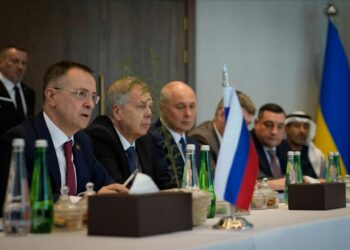
Not far away in the Middle East, US, Russian and Ukrainian representatives met in Abu Dhabi, for the first time since February. While US officials have said they were seeking a “final end” to the conflict, it seemed the talks only reached limited agreements on prisoner exchanges with no signs of a ceasefire. Ukraine insists that the talks should become multilateral with Europe having a seat at the table but Russia continues to be opposed to the idea.
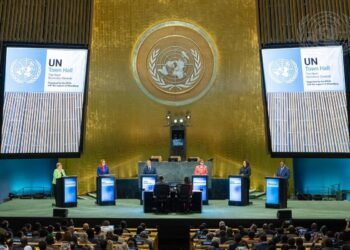
And the race for the position of the Secretary-General continues, with Rebecca Grynspan Mayufis, Rafael Grossi, and Caroline Rodrigues Birkett appearing to be the frontrunners. However, it would only take one P5 member in the Security Council, producing a red ballot to put them out of the race. In recent years the UN has become a diplomatic sandcastle, its principles vulnerable to being smashed down by members of the Permanent Five.
With negotiations over major conflicts now unfolding in the Middle East, mediation is shifting away from New York and the United Nations. A new Secretary-General will inherit an office with a large bureaucracy to manage conflict but whose good offices role has been effectively outsourced. Will the next SG change this?
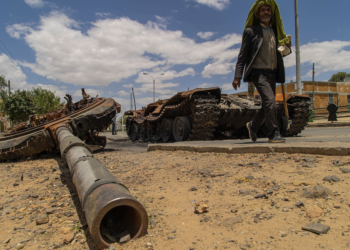
In this edition of Diplomacy Now we feature two articles on the Secretary-General race from a UN expert and former diplomatic insider. We also feature a deep dive into the renewed conflict in Tigray and the rising tensions between Eritrea and Ethiopia and an unpacking of the unceremonial end of MINURSO in Western Sahara. The edition concludes with an article on ongoing conflict in Yemen and rising attacks, along with an article on recent Russia-Ukraine negotiations.
As with every edition the views expressed by contributors are not all necessarily our own. However, ICDI remains committed to the ethos and philosophy that open debate, dialogue, diplomacy, and mediation, rather than armed conflict and war, offer the way forward to resolving any conflict.
Thank you for reading Diplomacy Now and we welcome your feedback at diplomacynow@dialogueinitiatives.org.
Jamal Benomar
Chair of ICDI