In March 2015, Yemen’s warring political factions were on the verge of a power-sharing agreement. According to Jamal Benomar, the former United Nations Special Envoy to Yemen who was mediating the negotiations, the Houthis, Islah (a major Sunni political party with ties to the Muslim Brotherhood), Socialist party, Nasserite party and other political forces had progressed to discussing where the agreement would be signed. Then Saudi Arabia intervened militarily, derailing the conclusion of the talks. The rival factions negotiating with the Houthis abandoned the talks, expecting a Saudi military victory to make compromise unnecessary.
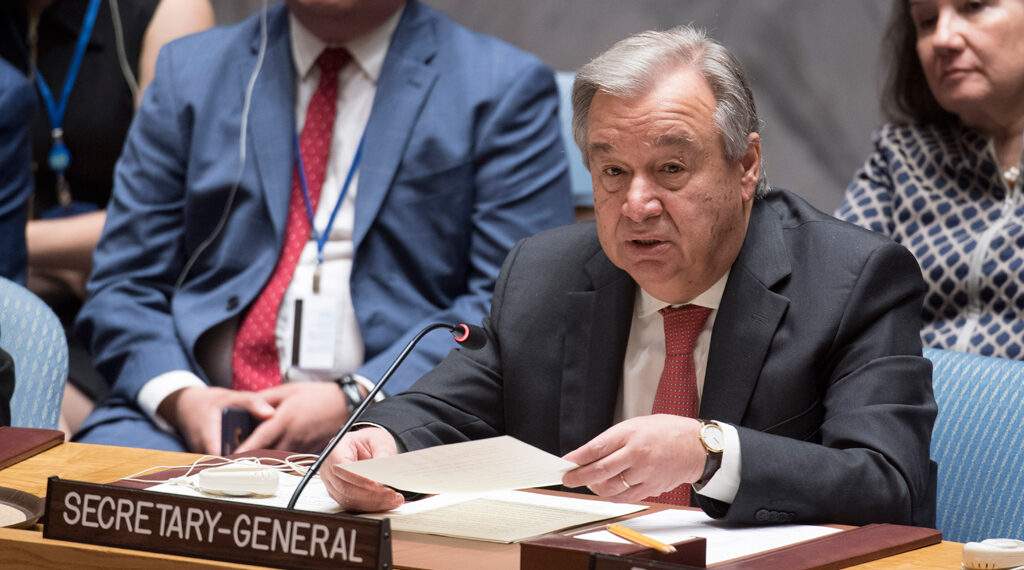
The Obama administration was instrumental in that decision. “They effectively encouraged the Saudis to go to war,” Benomar said. He argues that Riyadh would never have launched the intervention without Washington’s approval and military, logistical, and diplomatic support.
US support for Saudi intervention a major foreign policy blunder
Benomar considers this one of Obama’s major foreign-policy blunders. He believes the administration supported the intervention partly to appease Saudi leaders unhappy with Washington’s then nuclear diplomacy with Iran. He was particularly critical of the diplomatic cover the Obama administration provided at the UN, where Samantha Power was the US ambassador.
The administration subsequently backed UN Security Council Resolution 2216, which demanded that the Houthis withdraw from seized territory and surrender their weapons. Benomar viewed the resolution as reinforcing demands for Houthi capitulation to a Saudi-backed in exile in Riyad, undermining the prospect of a realistic negotiated settlement that had been within reach.
Eleven years later, the consequences of that decision continue to haunt Saudi Arabia. The war devastated Yemen, failed to restore the previous political order, and left Riyadh facing an increasingly capable adversary.
The Houthis, formally known as Ansarullah, emerged from a religious and political revival movement among Yemen’s Zaydi Muslims, whose tradition is distinct from both mainstream Sunni and the Twelver Shia Islam practiced in Iran. Zaydi imams ruled much of northern Yemen for roughly a thousand years, until the overthrow of the monarchy in 1962. After fighting six wars against Yemen’s government between 2004 and 2010, the Houthis captured the capital, Sanaa, in September 2014, aided by government forces that remained loyal to former President Ali Abdullah Saleh.
Ansarullah expands its influence and shakes Saudi Arabia
Today, Ansarullah controls territory containing an estimated 70 to 80 percent of Yemen’s population. Despite its origins in the Zaydi community, it has cultivated alliances across tribal and religious lines, including with Sunni communities, and absorbed local political and military networks. While its repressive governance has generated opposition, its roots in large segments of Yemeni society help explain why successive military campaigns have failed to dislodge it.
The latest confrontation followed months of mounting regional tensions after the US-Israeli war against Iran began in February 2026. Ansarullah initially stayed out of the fighting. Its entry came amid renewed confrontation with Saudi Arabia over restrictions on access to Houthi-controlled Yemen.
On July 13, 2026, as an Iranian flight challenged restrictions on Sanaa’s airport, Saudi-backed Yemeni forces bombed the airport’s runway to prevent it from landing. Ansarullah retaliated with what it called a “blockade for blockade” strategy, initially targeting Saudi maritime traffic through the Red Sea and Bab Al Mandeb before expanding attacks against Saudi territory.
With Iranian assistance, Ansarullah has developed ballistic missiles and drones capable of reaching deep into Saudi Arabia. The kingdom retains overwhelming conventional military superiority, but defending its sprawling infrastructure against repeated attacks is another matter. The October strikes exposed just how costly that vulnerability can be.
According to aviation data reported by Reuters, 86 percent of scheduled flights at Riyadh’s King Khalid International Airport were canceled between October 8 and 25. More than 7,800 flights were canceled across Saudi Arabia.
Such disruptions threaten Crown Prince Mohammed bin Salman’s Vision 2030 program, which depends on attracting foreign investment, tourists, businesses, and international airlines. Ansarullah has effectively been able to undermine investor confidence and overall stability within the kingdom without defeating the Saudi military.
Saudi Arabia also has far more to lose economically than the Houthis. Yemen was already the Arab world’s poorest country before the war, while Saudi Arabia’s oil facilities, airports, and major investments offer the Houthis far more valuable targets. Attacks on Saudi oil infrastructure have already sent shockwaves through the global economy, and continued strikes threaten further disruption.
US and Saudi military intervention unlikely to stop Houthi attacks
The Saudi record of military intervention offers little reason for confidence in its ability to defeat the Houthis. Its 2015–22 campaign failed to reverse the Houthi takeover of Sanaa. Even direct US military intervention has failed to decisively weaken the movement. In March 2025, the Trump administration launched intensive airstrikes against Ansarullah over attacks on Red Sea shipping. After 52 days, Washington accepted an Oman-brokered ceasefire. The Houthis stopped attacking American vessels but retained substantial military capabilities and continued striking Israel.
Against this backdrop, another major obstacle to peace has been Yemen’s fractured political landscape, which Saudi Arabia’s intervention helped deepen.
The anti-Houthi camp includes Saudi-backed factions, United Arab Emirates-supported southern separatists, the predominantly Salafi Giants Brigades, forces associated with former president Ali Abdullah Saleh’s family, and armed groups linked to Islah. These groups often have different political objectives and foreign sponsors. Some favor a unified Yemen; others seek southern independence.
Benomar emphasizes that many depend heavily on Saudi or Emirati financing and might struggle to survive without it. He distinguishes them from Islah-linked forces in Taiz and Marib, which have a more substantial domestic political and social base.
Internal divisions and rivalries continue to threaten peace in Yemen
Benomar also describes splits between leaders living abroad and those who remained inside the country. Some domestic factions, including elements of Islah, the Socialist Party and the former ruling party have maintained communications with Ansarullah and opposed foreign intervention on sovereignty grounds, despite their differences with Houthi rule.
These divisions complicate any prospect of a lasting peace. Even a Saudi-Houthi agreement would leave much of Yemen’s civil conflict unresolved, with the country’s competing political and armed factions still needing to negotiate their future.
Yet a diplomatic opening already exists. A UN-brokered truce in April 2022 substantially reduced fighting. Subsequent Saudi-Houthi negotiations produced commitments toward a broader peace roadmap announced in December 2023, including a nationwide ceasefire, salary payments, eased restrictions on ports and airports, and renewed Yemeni political talks. Those commitments were never fully implemented.
Saudi Arabia has legitimate security concerns. Houthi missile strikes endanger civilians, and the movement’s repression of political opponents cannot be ignored. Yet prolonged military campaigns have not only failed to deliver the security Riyadh seeks but have arguably backfired catastrophically on the kingdom.
Riyadh will eventually have to negotiate an accommodation with Ansarullah. It can do so while there is still room to limit the damage and help bring Yemen’s other factions into a broader political settlement, or continue a war that has already consumed eleven years without achieving its central objective.
Sina Toossi is a Senior Non-Resident Fellow at the Center for International Policy. For more than a decade, he has worked across think tanks, universities, and policy and advocacy organizations, producing research and analysis on US-Iran relations, US Middle East policy, nuclear non proliferation, and human rights abuses in Iran. His analysis has appeared in Foreign Affairs, Foreign Policy, The Guardian, USA Today, and other leading publications, and he is regularly featured in international media. He was selected as a Ploughshares Fund and Horizon 2045 Nuclear Futures Fellow in 2024 and received the Middle East Policy Council’s 2024 40 Under 40 Award.